ADA Mobile Commode Rental: Understanding Exemptions and General Demands
Renting portable bathrooms sounds straightforward until availability goes into the discussion, and it should. For occasion coordinators, property managers, specialists, schools, churches, and family members intending huge celebrations, the question usually shows up late and with some anxiety: do we need an ADA portable toilet, and if so, how many?
That unpredictability is easy to understand. Mobile washrooms rest at the crossroads of momentary logistics and irreversible civil-rights commitments. Individuals tend to presume that since a configuration is brief term, the policies are lighter or even more flexible. In technique, availability still matters, and the federal criteria do not disappear just because the toilets got here on a trailer rather than being developed right into a wall.
The standard framework is clear. In the United States, the controlling government availability standard for mobile commode rentals is the 2010 ADA Requirements for Accessible Design, as translated by the Division of Justice and the Accessibility Board. For the majority of general usages, an available unit is not optional window clothing. It becomes part of what makes a toilet setup usable by the public.
Where individuals get tripped up remains in the information. They become aware of an exemption for construction websites and presume it uses a lot more extensively than it does. They order a bigger device with a sticker label on the door and presume that alone makes it certified. Or they count the variety of toilets on website but fail to remember that the regulation applies by cluster, not simply by the grand complete spread throughout a property.
This is where cautious preparation aids. If you comprehend the narrow exemption, the 5 percent policy, and the core physical needs for an easily accessible setup, you can make far better decisions early and prevent the pricey shuffle that happens when the units are already delivered.
The inquiry behind the rental order
When a person requests for an ada portable bathroom service, they are often asking three various questions at once.
First, they need to know whether the regulation requires an available system at all. Second, they wish to know whether a certain device being used by a vendor in fact qualifies as an ada compliant portable toilet. Third, they would like to know whether placing that system somewhere on the website suffices, or whether the surrounding conditions additionally need to be accessible.
All three matter.
An ada obtainable portable washroom is not simply a larger box with a bigger door. Accessibility depends on the unit itself, how many easily accessible systems are given within each cluster, exactly how the device is recognized, and whether an individual can reach it and utilize it. That last point obtains overlooked more than it should. A compliant-looking unit set past uneven ground, obstructed by barriers, or gotten to just by a noncompliant ramp can still create serious access problems.
What the federal basic actually controls
The regulating standard is the 2010 ADA Standards for Accessible Design. That is the government reference factor for access, and it relates to portable bathroom leasings through the interpretations utilized by the Department of Justice and the Access Board.
That issues because a great deal of conversations in the area still wander toward routine or supplier shorthand. A person may state, "We constantly drop one handicap device if the customer asks," or, "It's short-term, so the normal guidelines do not actually use." Those are not secure assumptions. The regulating criterion is not what a supplier generally does. It is the ADA requirement and its suitable technological and scoping requirements.
For portable toilet setups made use of by the public, the accessible-unit need stays vital even at short-lived occasions. Temporary does not suggest excluded. A celebration that lasts one weekend break, a church fundraising event, a school area day, and a seasonal neighborhood occasion can all elevate the exact same ease of access issues.
The 5 percent guideline, and why the word "collection" matters
One of the clearest rules in this area is the scoping requirement for portable single-user toilet devices. At least 5 percent of the units in each collection have to come. The Accessibility Board has actually explained that this applies even at momentary events.
That expression, "in each collection," is entitled to focus. People often total all toilets across a site and afterwards think they are covered if one obtainable device shows up somewhere in the matter. But the regulation focuses on the collections of units, not just the overall event inventory.
Imagine a huge outdoor event with mobile toilets put in several separate locations throughout the grounds. If those locations work as unique collections, accessibility needs to be thought about at each cluster, not just at the site as a whole. A person needs to not be anticipated to travel throughout the place to find the only accessible alternative while every person else has a close-by basic unit.
This is just one of the most common preparation mistakes due to the fact that it has a tendency to appear late. Theoretically, the overall unit matter looks fine. On the ground, the easily accessible toilet is parked in the wrong place.
For customers asking about ada compliant portable bathrooms, this is usually the very first factor that changes the order. It is not just an issue of whether you have one easily accessible device. It refers exactly how your toilet design is organized.
The narrow construction-site exemption
Now for the piece that creates one of the most confusion.
There is a recognized difference involving mobile commode devices at construction sites made use of specifically by construction personnel. Those systems are exempt from the portable-toilet accessibility scoping demand in the cited 1991 criterion. That is a particular carve-out, and it is not a covering exemption for anything taking place near building or on rough ground.
The keyword is specifically. If the portable bathrooms are for construction workers just, that exemption is part of the lawful discussion. Once individuals stretch that reasoning beyond its real boundaries, trouble starts.
A mixed-use website alters the photo. A project with site visitors, participants of the public, or various other non-construction individuals increases a different collection of considerations. Furthermore, a basic mobile washroom service for an occasion, public gathering, or customer-facing setup does not drop under that slim construction-personnel exception.
This is why it helps to slow down and ask a plain-language inquiry prior to renting out. Who will be making use of these systems? If the solution includes the public, guests, guests, clients, parishioners, students, or families, you are no longer in the risk-free region of a construction-only assumption.
People often latch onto the phrase "construction site" as though it resolves whatever. In practice, the much better lens is use, not environment. Mud, fencing, equipment, and momentary problems do not immediately create an exemption. Special use by building and construction personnel is what matters in the exemption described here.
What makes an obtainable portable toilet greater than a label
A system can not end up being certified by marketing language alone. Terms like ada handicap available mobile bathroom, ada certified easily accessible mobile washrooms, or ada-compliant mobile washrooms audio comforting, however the real demands are useful and physical.
Accessible mobile bathroom units must be related to the International Sign of Availability. That is a noticeable and integral part of conformity because customers require to be able to situate the easily accessible choice without guesswork. Still, signs is only one piece.
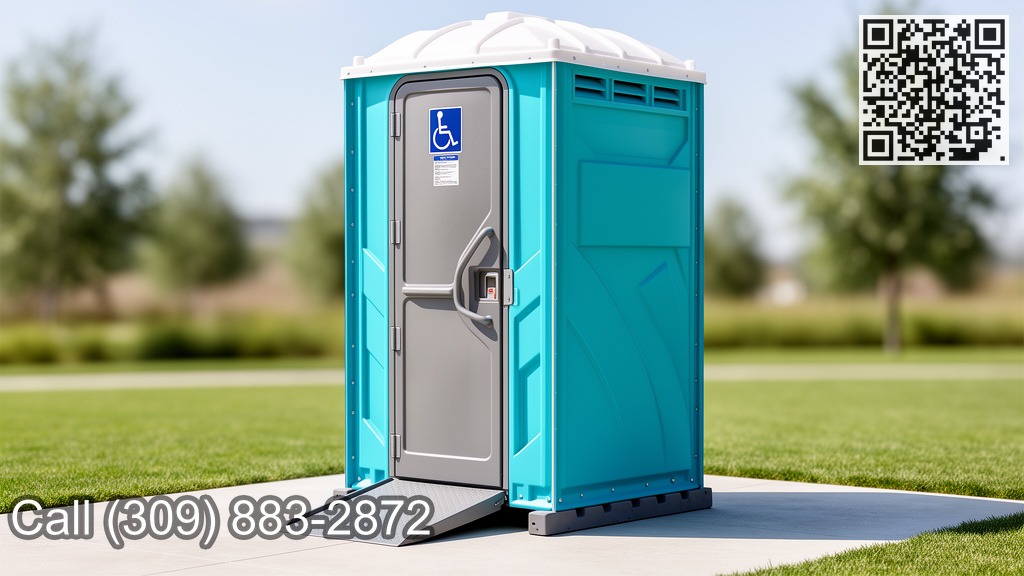
The devices should likewise have an easily accessible path and entry. If ramps or landings are required, those functions should adhere to the ADA technical needs. This factor tends to shock people because they focus on the commode box itself and forget that the course to it matters equally as much.
Anyone that has actually worked around short-term sites has actually seen how conveniently gain access to can be threatened by positioning. A vendor may deliver an ada portable restroom that is flawlessly suitable in theory, only for it to be established on an irregular location, crowded by barricades, or separated behind a quality adjustment that makes entrance difficult or impossible. The criteria do not stop at the door.
Inside the unit, the commode room technological demands likewise come into play. That includes fixture clearances, turning room, and door maneuvering clearances, in addition to the relevant grab-bar and water-closet clearance rules. Those are technical needs, and they exist since usability depends on more than a broader footprint. An individual utilizing a wheelchair or various other mobility aid needs enough space to method, get in, shut the door, turn, placement, and transfer as intended.
This is why a real ada compliant portable bathroom is not compatible with a just roomy portable device. More room is practical, yet the setup and clearances are what figure out whether the room operates accessibly.
Temporary events still bring real obligations
Short-term occasions are where misconceptions multiply. Organizers are handling authorizations, vehicle parking, climate, volunteers, deliveries, and crowd flow. Toilet leasings come to be an additional line product, and ease of access can obtain decreased to a basic amount question.
But temporary events are particularly part of the discussion right here. The Gain access to Board has stated the 5 percent accessible-unit demand uses even at short-lived occasions. That implies a one-day fundraising event or weekend break fair need to not be treated as if availability is optional since the arrangement is fleeting.
In real life, this frequently becomes a placement concern greater than a procurement concern. Coordinators may lease the right variety of ada certified mobile washrooms but place them in such a way that isolates them from the event's functional center. An available course that exists just on a website map, not on the ground, is a problem.
The thoughtful technique is to prepare the restroom area the method you would certainly prepare easily accessible auto parking or an entrance. Where are individuals arriving? Where are the major paths of traveling? What terrain changes or squeeze points will matter as soon as the group completes? Those questions are illegal trivia. They form whether a guest can use the occasion with dignity.
Why "one available system" is not always enough
There is a strong lure to believe in minimums. If a consumer listens to "5 percent," the mind promptly turns towards the tiniest possible number that might satisfy the guideline. That is reasonable, specifically when budgets are tight.
Still, minimum compliance and workable gain access to are not always the very same point in practice.
If systems are divided right into several clusters, the math may need easily accessible systems in greater than one location. If web traffic is heavy, a single accessible system may develop lengthy waits that disproportionately affect users that need it. If a site is huge, one correctly labeled ada portable bathroom put much from the primary circulation may satisfy neither the spirit neither the sensible feature of accessibility.
This is where judgment issues. The regulation supplies the structure, but excellent planning asks a second inquiry: will a person sensibly have the ability to find and use this bathroom with the exact same basic convenience used to others?
That is commonly the distinction in between a checkbox strategy and a respectful one.
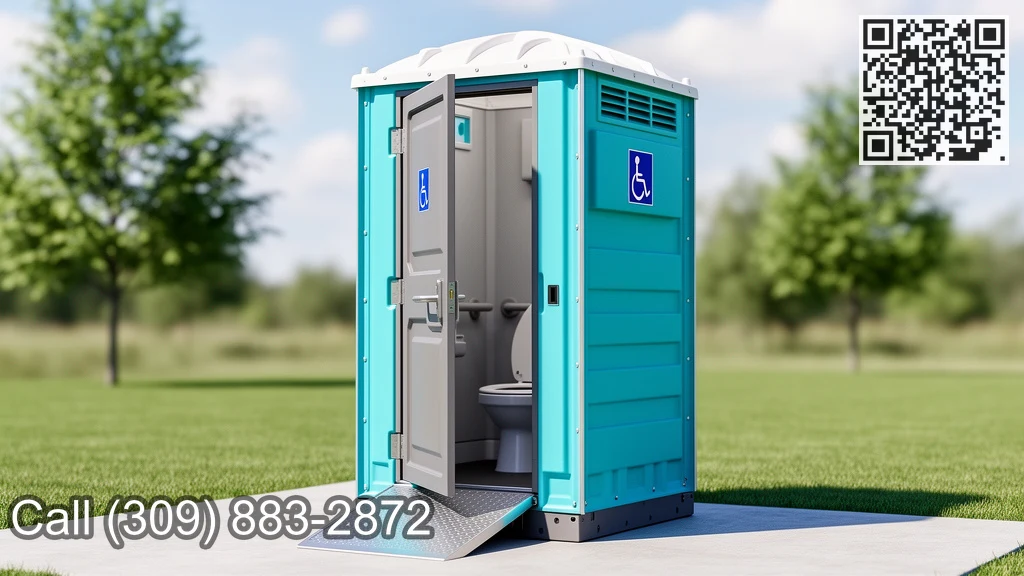
The course to the device can make or break compliance
Among all the ada portable toilet requirements, the available path is among the most convenient to underestimate.
People image compliance as a residential or commercial property of the device. They neglect that gain access to begins long prior to the door swing. If the path is blocked, unsteady, high, or separated by attributes that require a noncompliant ramp or touchdown, the arrangement can fail users also if the portable toilet itself was manufactured to the best technical layout.
The criteria call for an easily accessible course and entrance, and when ramps or landings are needed, those functions have to abide by ADA technological demands. That positions duty on the broader configuration, not simply https://reidfwmq402.oakridgedigest.com/posts/ada-compliant-portable-toilet-rental-and-accessible-entryway-compliance the supplier's devices inventory.
For coordinators, this indicates the distribution area is not a second thought. It belongs to conformity. A strong, reasonably navigable strategy issues. So does avoiding final field improvisation, like setting the accessible unit any place there is room after the basic units are currently in place.
The most preventable mistakes take place when accessibility is handled at the end of the format process instead of the beginning.
What renters need to ask prior to distribution day
If you are leasing for a public or guest-facing setting, it aids to ask straight questions early. You do not require a lawful workshop. You need quality regarding the unit, the matter, and the site plan.
Here are the functional questions that normally matter most:
- Is the unit being given meant to function as an ada certified mobile bathroom, not just a bigger conventional model?
- How several restroom clusters will certainly feed on the website, and does each collection have actually the needed available coverage?
- Will the system be related to the International Sign of Accessibility?
- Is the planned path and entrance accessible, consisting of any ramp or touchdown that might be needed?
- Has the final positioning been examined with the real site conditions in mind, not simply the order sheet?
Those five concerns have a tendency to expose most avoidable troubles prior to the vehicle arrives.
Common misconceptions that lead to negative setups
Over the years, the very same incorrect assumptions tend to emerge over and over. They deserve calling plainly since they seem affordable up until you contrast them to the actual requirements.
The very first misunderstanding is that short-term methods excluded. It does not. The 5 percent regulation still applies at short-lived events.
The secondly is that a person available device somewhere on the building fixes the problem. It may not, specifically when bathrooms are set up in different clusters.
The 3rd is that the construction-site exception uses whenever a setup feels sturdy or work-related. It does not. The exemption defined below is connected to mobile units used specifically by building personnel.
The fourth is that signs alone confirms conformity. Recognition with the access icon is needed, however it is just one component of the total picture.
The fifth is that the system can be certified even if the path to it is not. The requirements call for an obtainable course and entryway, and that bordering context matters.
When clients comprehend these points early, the rental conversation becomes a lot easier and much more productive.
A more comprehensive conformity climate is shaping expectations
Accessibility enforcement does not exist in a vacuum cleaner, and it serves to acknowledge that. An appropriate 2026 development underscores the broader direction of ADA compliance task: the Department of Justice prolonged the due date for state and city government internet and mobile availability rules to April 26, 2027 for bigger entities.
That update is not about portable toilets specifically, however it indicates something important. Availability is being enforced and reviewed across more components of organizational life, not less. Physical access, electronic gain access to, public-service access, and temporary-access inquiries significantly sit within the very same wider compliance culture.
For any individual responsible for facilities, events, or public lodgings, that wider climate must motivate a more severe approach to details like ada compliant mobile toilets. Not because mobile washroom services are extravagant or high profile, however since they are part of whether people can take part totally and with dignity.
The human side of a technical requirement
It is easy to allow a subject similar to this become abstract. Percentages, path requirements, technical clearances, icons, scoping exemptions. All of that is essential, yet none of it is the actual reason accessibility matters.
The genuine factor is that a bathroom is not optional framework. When easily accessible washroom access is missing, people see fast, and they pay the cost personally. They leave early. They count on help they should not need. They are forced to intend around a barrier that barely register.
That is why the difference in between an ada mobile toilet and a typical device can not be dealt with as cosmetic. It affects whether somebody can stay at an occasion, do their task, attend a solution, support a child, or take part in public life without avoidable embarrassment or hardship.
The legislation offers us the structure. Great operators, mindful planners, and conscientious occupants give that structure sensible effect.
Getting it right without overcomplicating it
For most non-exempt portable restroom services, the course is fairly straightforward once the complication is stripped away. Make use of the 2010 ADA Requirements for Accessible Style as the controlling federal standard. Bear in mind that for clusters of mobile single-user units, a minimum of 5 percent in each collection need to come, including at short-term occasions. Make certain the accessible system is understood the International Sign of Ease Of Access. Confirm that there is an easily accessible route and entrance, with any type of called for ramps or touchdowns satisfying the suitable technical requirements. And do not neglect that the device itself should please the technical toilet-room demands that govern clearances, maneuvering room, and relevant features.
Treat the construction-personnel exception meticulously and directly. It is not a faster way for general public rentals.
If you come close to ada portable toilet service with that said state of mind, the procedure becomes much less murky. Extra significantly, the outcome is more usable for individuals that depend on it. That is the typical worth going for, whether you are buying one ada-compliant mobile commode or coordinating several financial institutions of ada certified mobile toilets throughout a huge short-term site.
 Ask ChatGPT
 Ask Grok
 Ask Perplexity
 Ask Claude
 Ask Google AI
 Ask You